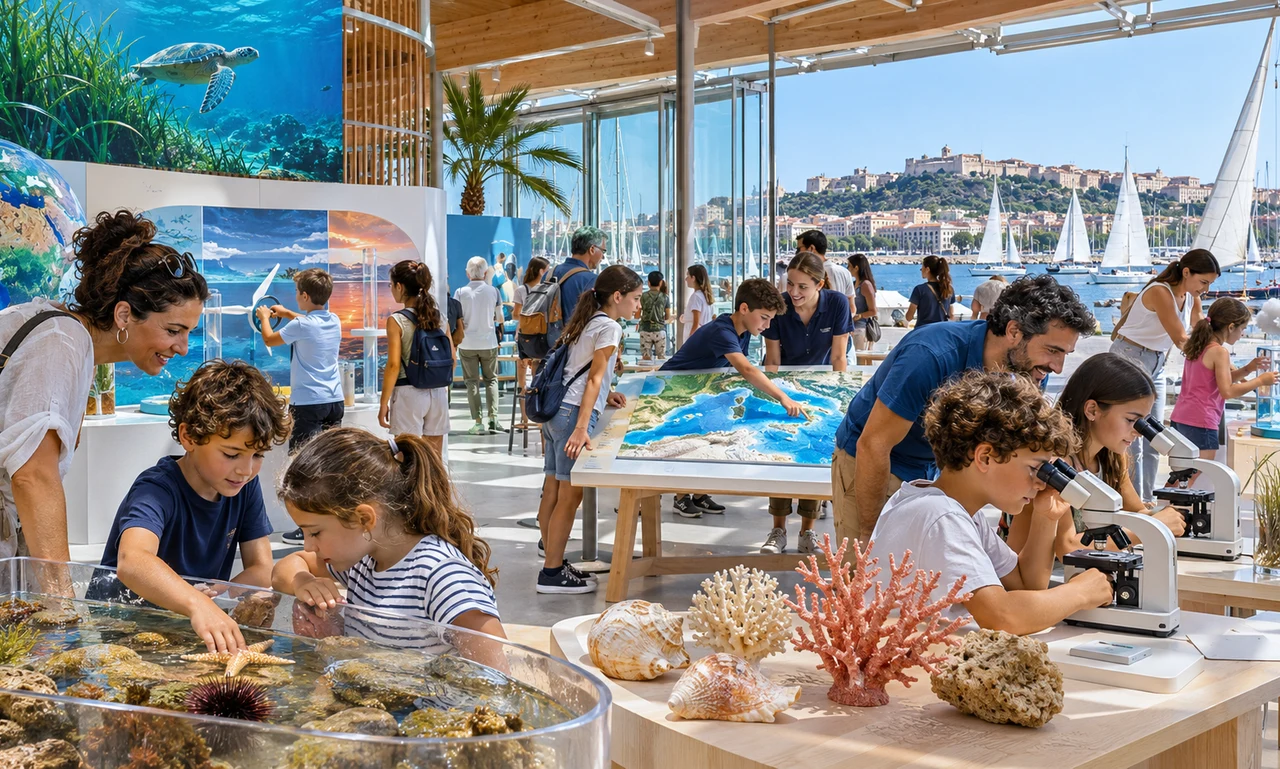
An interactive exhibition at the Luna Rossa sailing base in Cagliari welcomed more than 2,600 visitors, including 1,000 children, to explore how the ocean connects climate, biodiversity and human activity. UNESCO published results from the October event on November 17.
The Ocean&Climate Village combined guided tours, workshops, photographs, maps, data and interactive stations. Hosting the exhibition inside a sailing environment linked scientific ideas with a sport that depends directly on weather, water and coastal knowledge.
Four themes describe one connected system
The exhibition was divided into “One Ocean,” “The Climate Engine,” “Biodiversity” and “Ocean Anomalies.” Together, the sections explained how the ocean moves heat, supports living systems and responds to changes caused by human activity.
Visitors examined specimens under microscopes, experimented with cyanotype using seaweed and shells, and used movement to explore ocean processes. Workshops combined nautical experience, scientific observation and artistic expression, giving children several ways to engage with the same subject.
Local participation extends the exhibition
Sixteen marine bio-ecology students from the University of Cagliari volunteered alongside project ambassadors. Their role turned university knowledge into public explanation and gave younger visitors direct contact with people studying marine systems.
An outdoor photography exhibition by climate artist Enzo Barracco presented images from the Galápagos and Hawaii, adding a visual account of both the beauty and vulnerability of marine ecosystems.
Ocean literacy is not simply knowing isolated facts about marine life. It means understanding how the ocean influences people and how human decisions influence the ocean. By bringing education, sport, culture and local partnerships into one setting, the Cagliari programme showed how that understanding can be built through experience as well as information.