A recipe is more than a list of ingredients. The pressure of a hand, the timing learned from a relative and the table where a dish is served all carry cultural knowledge that is difficult to preserve on paper.
Thirty chefs, researchers and heritage professionals gathered in Quanzhou, China, from October 31 to November 4 for a UNESCO workshop called Forever Flavors. Their focus was the relationship between food, memory and family traditions.
Technique connects food to place
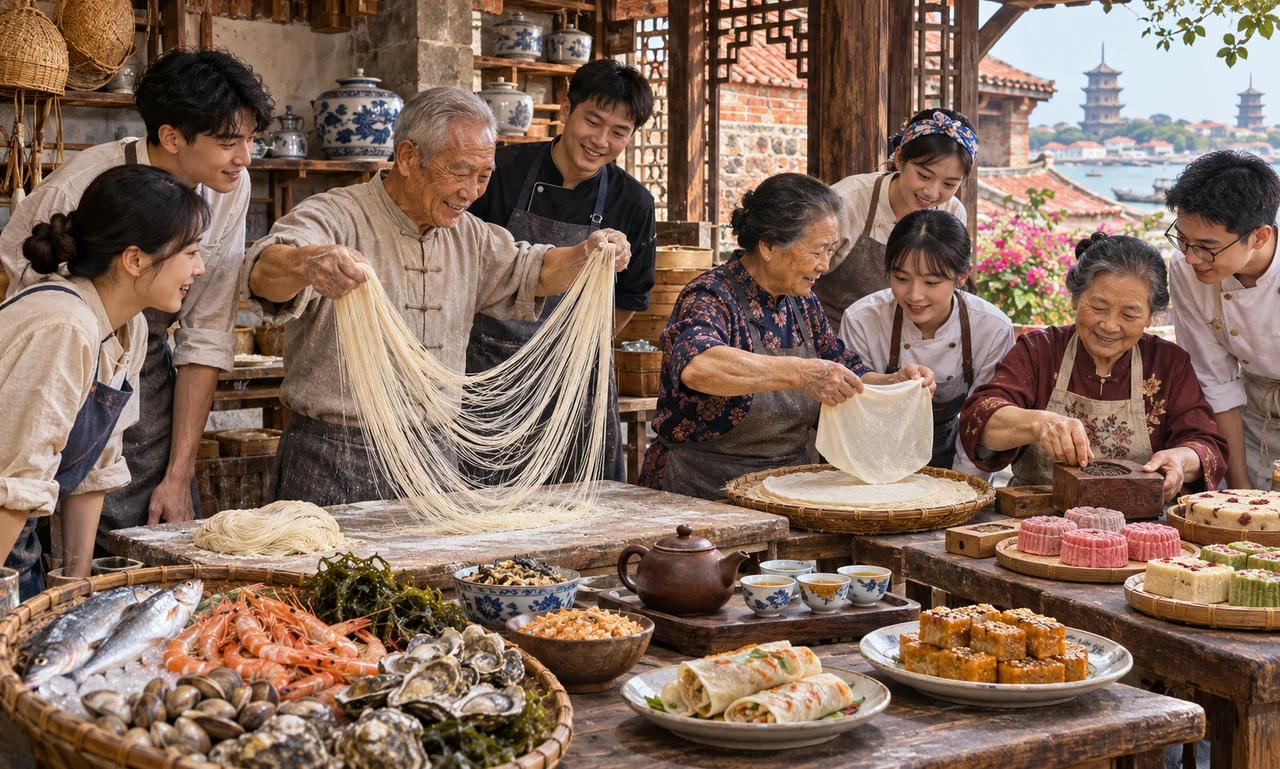
Participants encountered mianxian, the region’s fine handmade noodles; honggaozi cakes; and runbing pancakes filled and folded for shared meals. They also examined Tieguanyin tea processing and Dehua porcelain, linking what is cooked with the vessels, agriculture and craft traditions that shape how it is served.
Those connections matter because culinary heritage can be weakened even when a dish remains available. Industrial ingredients may replace local varieties, skilled preparation can disappear, and a food once tied to a season or ceremony can become detached from its social meaning.
At the same time, living heritage is not frozen. Families adapt recipes to migration, changing tastes and available ingredients. Preservation works best when communities retain the knowledge and authority to decide what continuity means.
Learning becomes visible in the kitchen
Five teams took part in a culinary challenge during the workshop. Cooking together made differences in method easier to discuss than a lecture alone. Participants could watch how dough was handled, ask why one step came before another and consider how a tradition might be taught to younger people.
Quanzhou’s long history as a port also makes its food a record of exchange. Flavours and techniques travelled with merchants, workers and families, then became local through repeated use.
Safeguarding culinary heritage therefore involves more than archiving a finished recipe. It requires supporting growers, markets, craftspeople, cooks and the occasions that bring them together. A dish survives most fully when someone still knows how to make it, another person wants to learn, and a community continues to find meaning in sharing it.