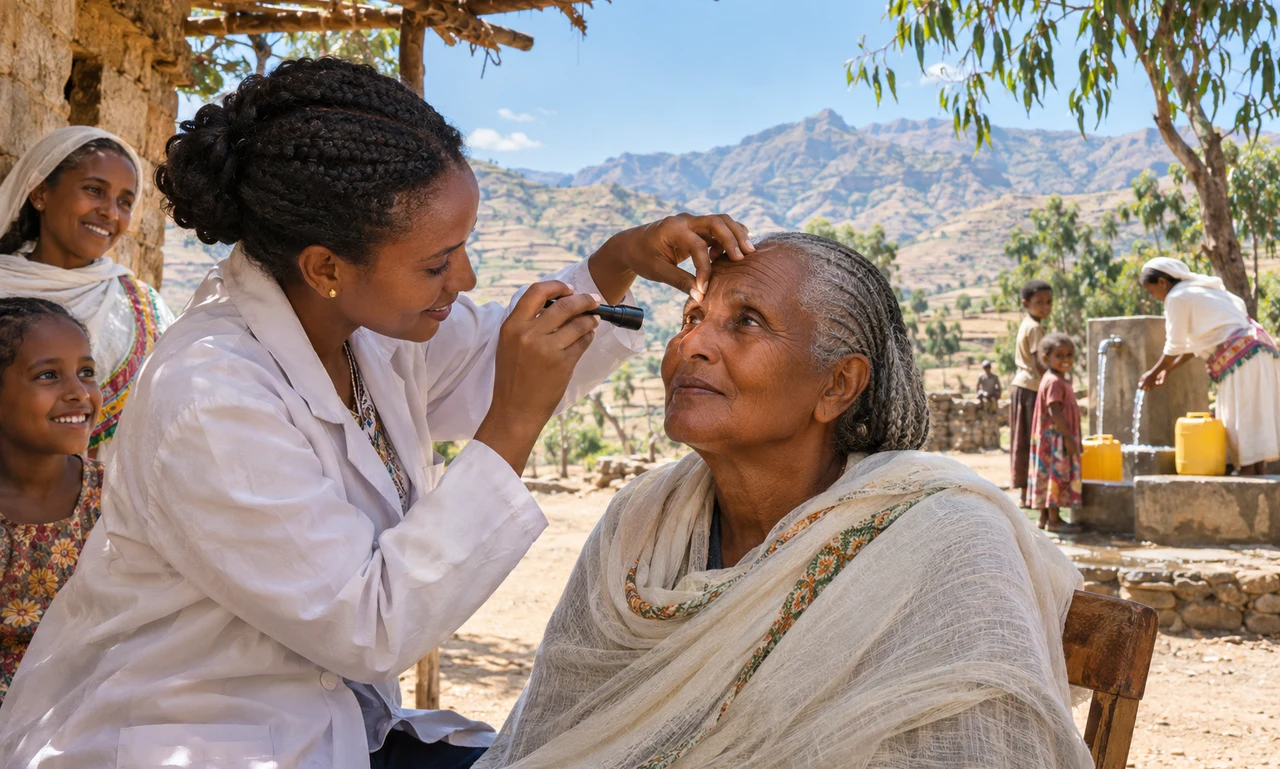
The World Health Organization has validated Eritrea’s elimination of trachoma as a public health problem, marking the result of a national effort that reached remote communities with eye care, antibiotics, clean-water measures and sanitation work.
Eritrea is the 11th country in WHO’s African Region and the 34th worldwide to reach this threshold. It is also the 66th country to eliminate at least one neglected tropical disease.
A strategy built around communities
Trachoma is caused by the bacterium Chlamydia trachomatis. Repeated infection can scar the inside of the eyelid, turn eyelashes inward and ultimately cause blindness. The disease is strongly associated with limited access to water, sanitation, hygiene and health services.
Following baseline surveys conducted between 2006 and 2020, Eritrea expanded the four-part SAFE strategy in areas where intervention was needed: surgery for advanced eyelid damage, antibiotics to clear infection, facial cleanliness to limit transmission, and environmental improvements focused on water and sanitation.
The programme surveyed all 58 sub-zobas, the country’s second-level administrative areas. Community-led sanitation helped extend prevention with limited external funding, while digital mapping supported the identification of affected settlements and the targeting of resources in hard-to-reach places. Oral azithromycin was the main antibiotic distributed.
Elimination still requires vigilance
WHO validation is not a declaration that the bacterium has disappeared. It means agreed public-health thresholds have been met and systems exist to detect and manage future cases. Eritrea has established pathways for new cases of trichiasis, the painful inward turning of eyelashes, and will continue surveillance.
The wider campaign remains unfinished. WHO reported that 92 million people were still living in trachoma-endemic areas in March 2026, with the disease remaining a public health problem in at least part of 29 countries.
Eritrea’s milestone demonstrates why elimination efforts extend beyond a single medicine. Treatment worked alongside sanitation, local participation, mapping, surgery and long-term follow-up. The result is a model of public health as sustained civic infrastructure rather than a short campaign.