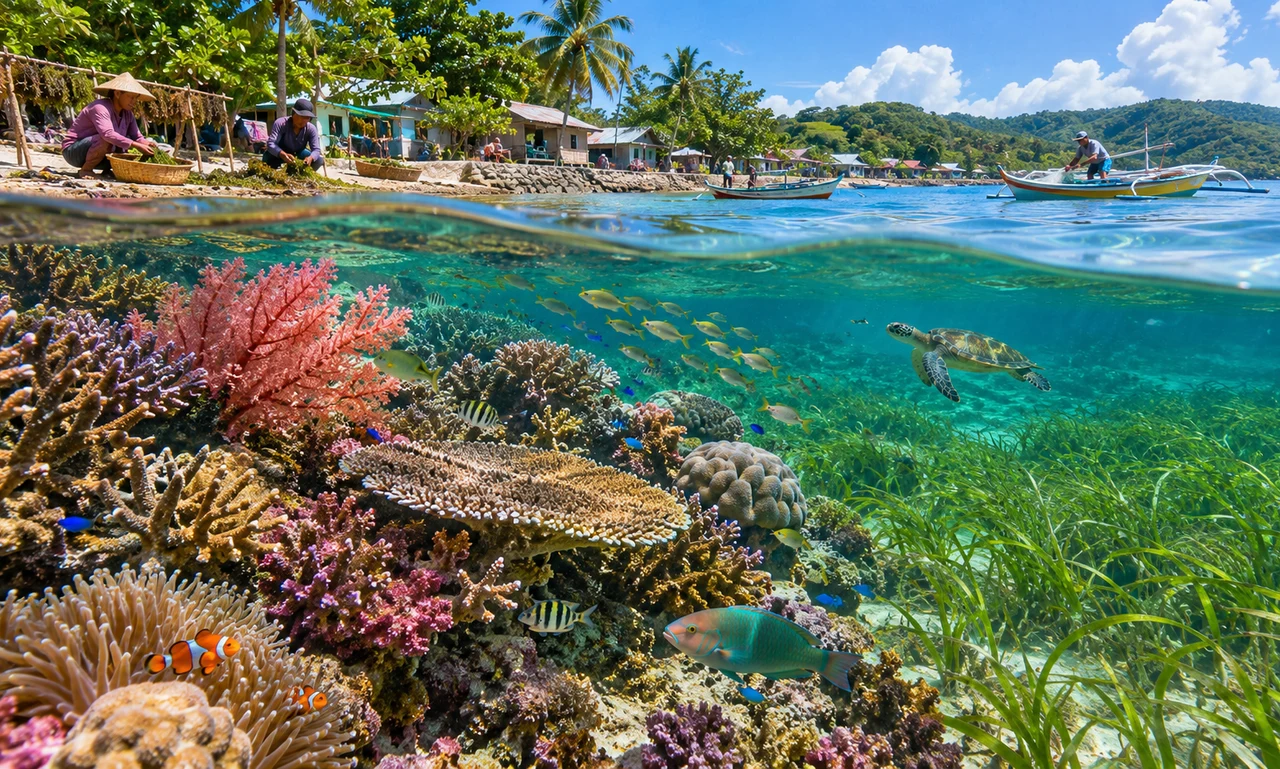
The Global Fund for Coral Reefs has announced more than US$30 million in investments and donor contributions to expand reef protection and community adaptation across 22 developing countries. The package was presented November 17 at COP31 in Antalya, Türkiye.
Coral reefs support fisheries, coastal protection, tourism and biodiversity, but they face rising temperatures, marine heatwaves, pollution, overfishing and development pressure. The fund is directing money toward reefs considered more likely to remain resilient and toward communities whose livelihoods depend on them.
Projects link conservation with local finance
More than US$10 million in newly approved investments will support work in several regions. In the Mesoamerican Reef, financing will cover clean water, sargassum management, insurance and loans for small-scale fishers. In Indonesia, the Biru Fund will support reef-positive businesses involving seaweed, fisheries, shrimp and waste management.
Work in the Philippines will strengthen marine protected-area networks across Mindoro and northeast Palawan. In Zanzibar, planned investment will support the Pemba Channel Conservation Area, sustainable finance and businesses intended to reduce drivers of reef degradation.
Building lending systems that can last
The announcement also highlights new or expanding finance mechanisms in Fiji, Solomon Islands and Papua New Guinea. These facilities pair concessional lending or guarantees with technical support so local enterprises can adopt practices that protect reefs while generating income.
Additional state commitments total more than US$20 million. Ireland has joined the fund as a state partner, while a new Pacific investment partnership is intended to improve access to patient capital for small island economies.
Funding alone cannot protect reefs without rapid reductions in greenhouse-gas emissions. The package instead tests how public money, private capital and local conservation can work together to protect the reefs with the strongest prospects for survival and help coastal communities adapt to unavoidable change.